Just like humans, dogs need plenty of rest to stay healthy, but dogs need a lot more sleep than we do. We see our dogs napping the days away and snuggling up for a good night’s rest, but are they really sleeping? And how much sleep do they really need? We’re breaking down the sleep basics for your dog, and how they might differ from pup to pup.
Naps
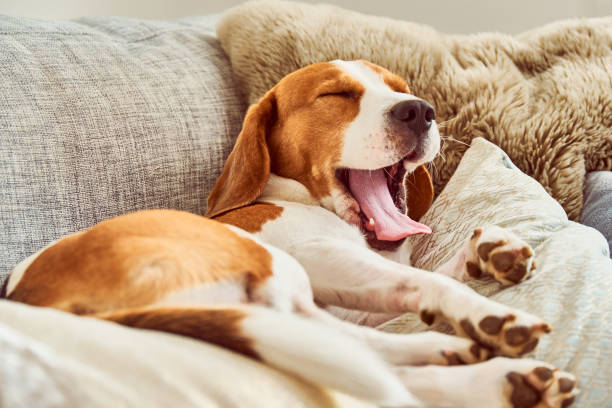
If your dog seems to nap all day, you might wonder—are they truly sleeping or just lying in wait? While dogs do sleep a lot–typically 12 to 14 hours a day for adults—much of their “napping” is light and alert. Unlike humans, dogs enter REM sleep for short bursts, meaning much of their rest is easily interrupted by movement, sounds, or even the scent of food. But, that doesn’t mean they are getting a worse quality of sleep.
Snoozing While Home Alone
When you’re away during the day, your dog will usually take a nap, but that doesn’t always mean they’re sleeping deeply. While some dogs nap peacefully, especially if they’re used to your routine and feel secure, others stay semi-alert, keeping an ear out for your return. If you notice that your dog is extra restless while you’re away, it could mean that they’re experiencing separation anxiety and are running on less sleep.
Differences in Breeds
Sleep needs definitely vary by breed. Larger breeds like Newfoundlands or Great Danes often require more rest than smaller breeds, simply due to the physical demands of their size. A huge factor is the mental needs of your dog as well. For example, working breeds, like Border Collies or Belgian Malinois, may sleep less if they’re under-stimulated, leading to restlessness rather than relaxation.
Sleepy Pups and Puppies
Across all breeds, age plays the largest role in deciding how much sleep your pup needs. Puppies are the true sleep champions—clocking 18 to 20 hours of sleep per day to support their rapid growth and development. Often, you will have to wake your puppy during the night to remind them to go to the bathroom. But don’t feel bad about interrupting their dreams, they’ll fall right back asleep. Adult dogs need less, 12-14 hours, while senior dogs often return to longer sleep cycles, 18-20 hours, due to age-related fatigue or health conditions. As long as your pup seems happy and healthy, there’s no reason to worry about how much or how little sleep they’re getting.
Understanding your dog’s sleep can help you gauge their comfort, health, and emotional well-being. Dogs are snoozing pros–a lesson we can all learn a little bit from–and it’s important that your dog is eating a balanced diet and getting enough exercise so they can honk shoo the days away.